Base UI Design System
Why Blizzard.com game websites were being built without a system, even though the goals of each was same
What Strategised and designed ashared foundation every franchise site builds on based on actual player data
Impact One design system powered 20+ websites 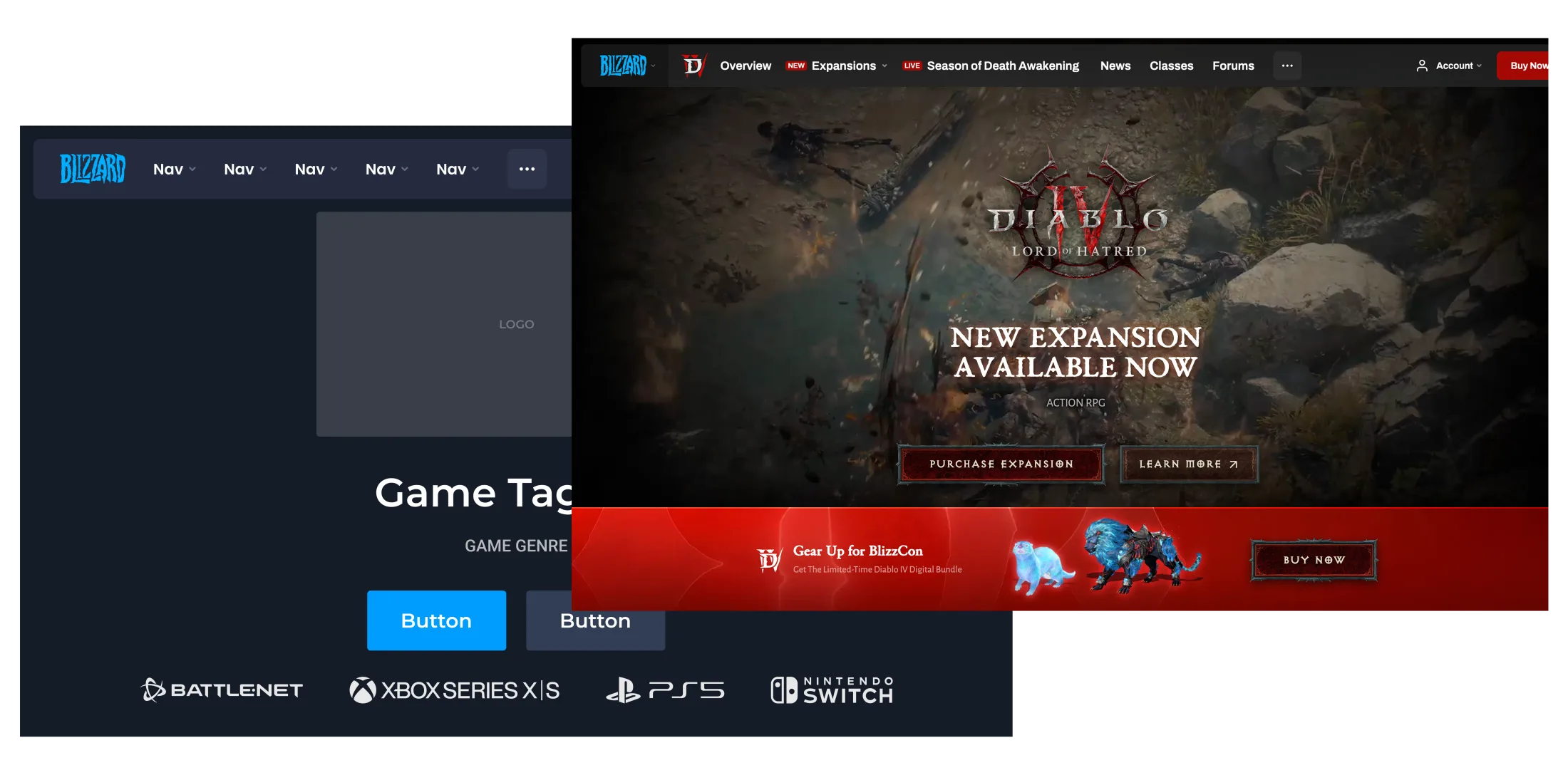
Every franchise was rebuilding the same page from scratch. All blizzard.com games websites shipped with their own one-off components, spacing, and interaction patterns, so every new game page meant re-solving problems the last team had already solved.
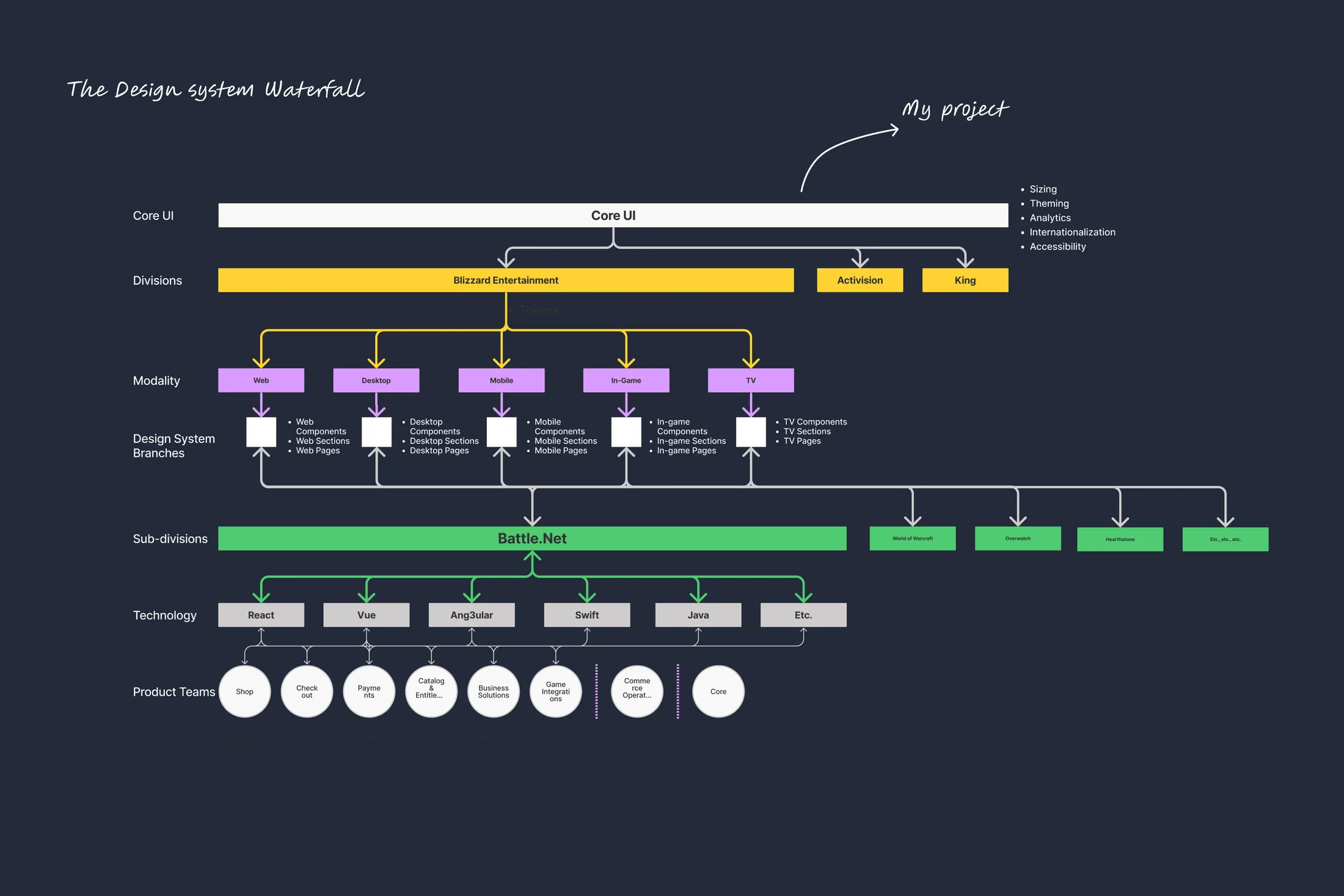
So I designed the layer every franchise would build on, based on analytics that supported conversion: one set of tokens, components, and sections every team pulls from instead of rebuilding.
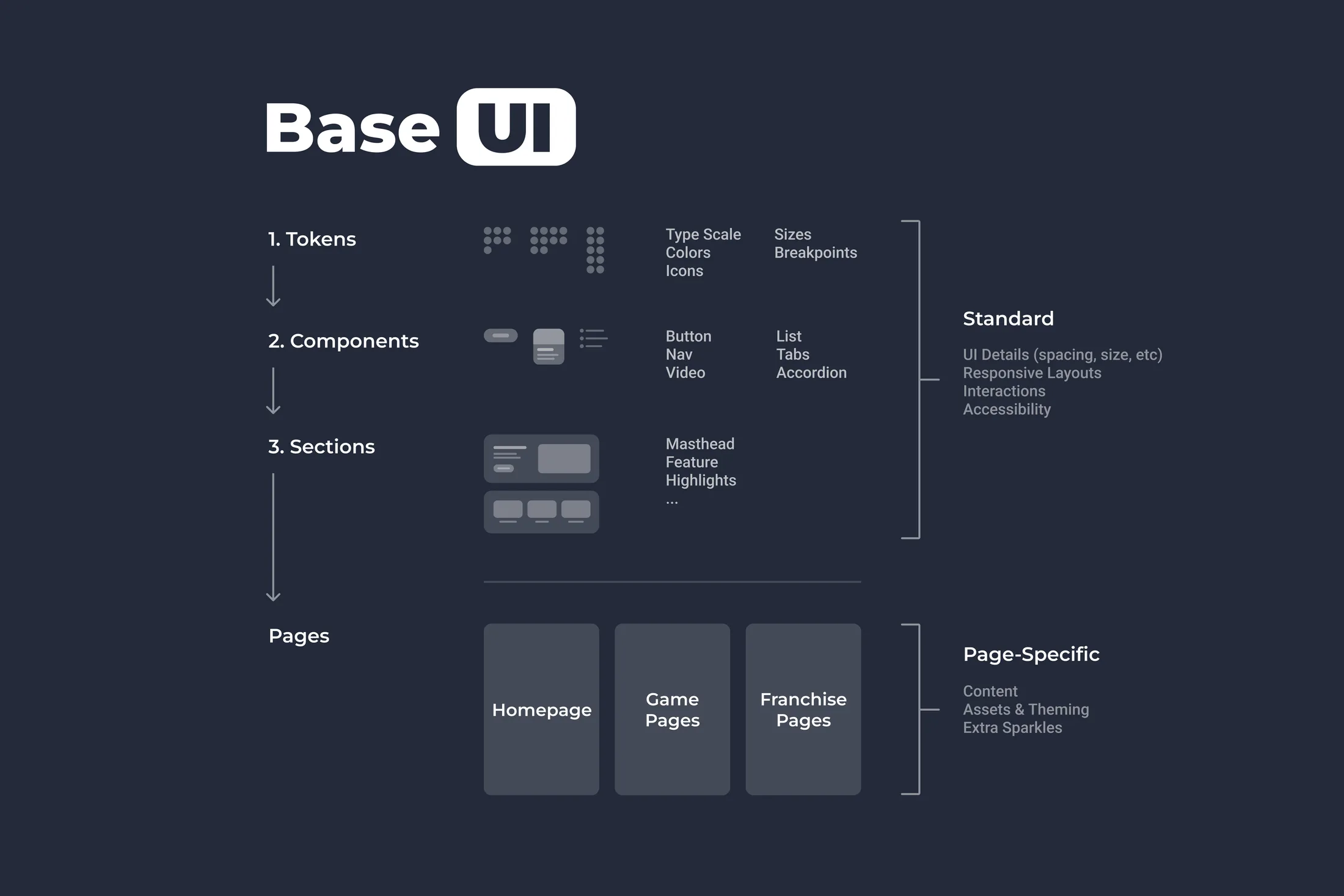
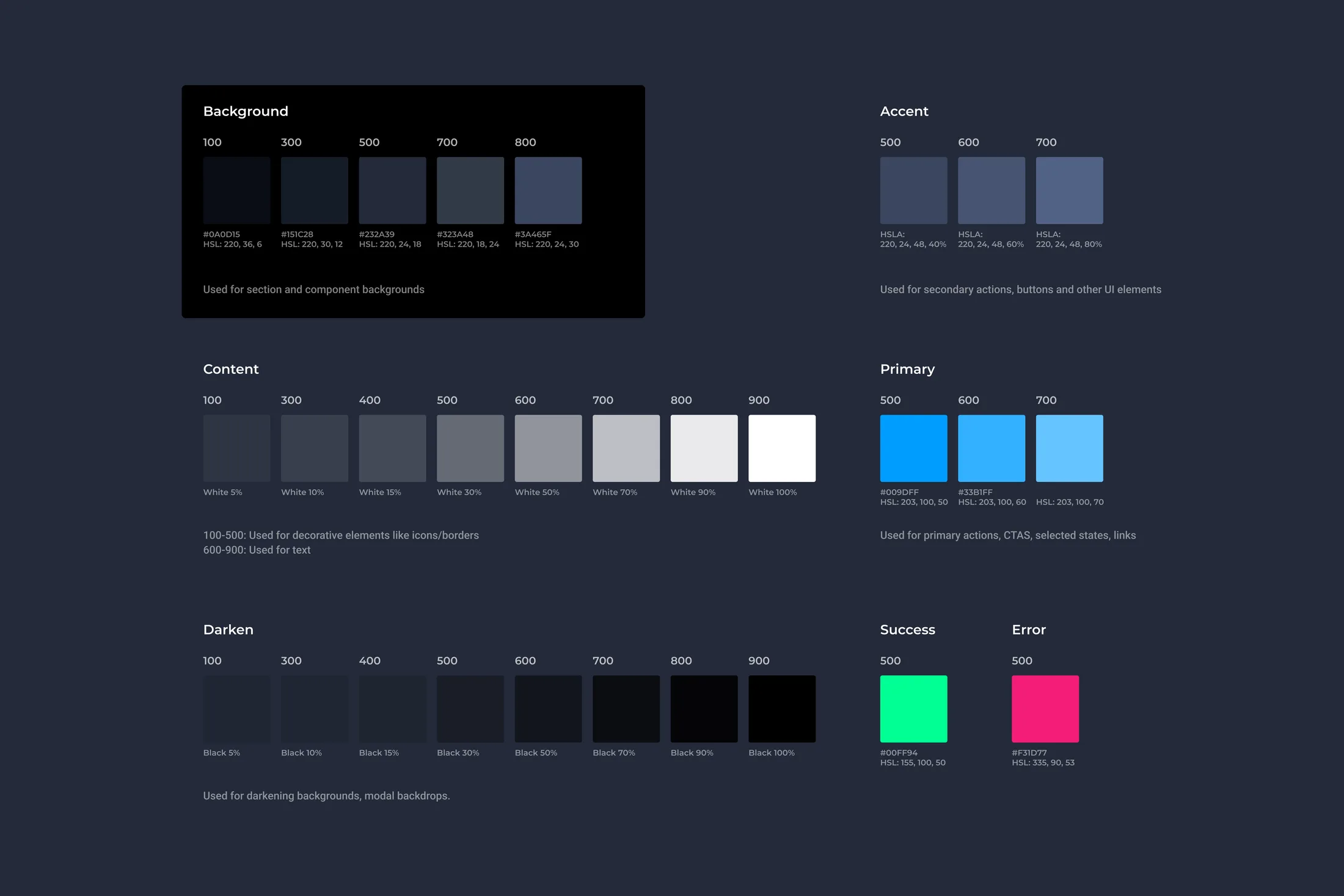
Starting from the most atomic pieces: tokens. Color, type, spacing, and icon tokens were defined in HSL scales rather than fixed hex values, so a whole surface could be retheme’d by shifting a hue instead of hand-editing every component.
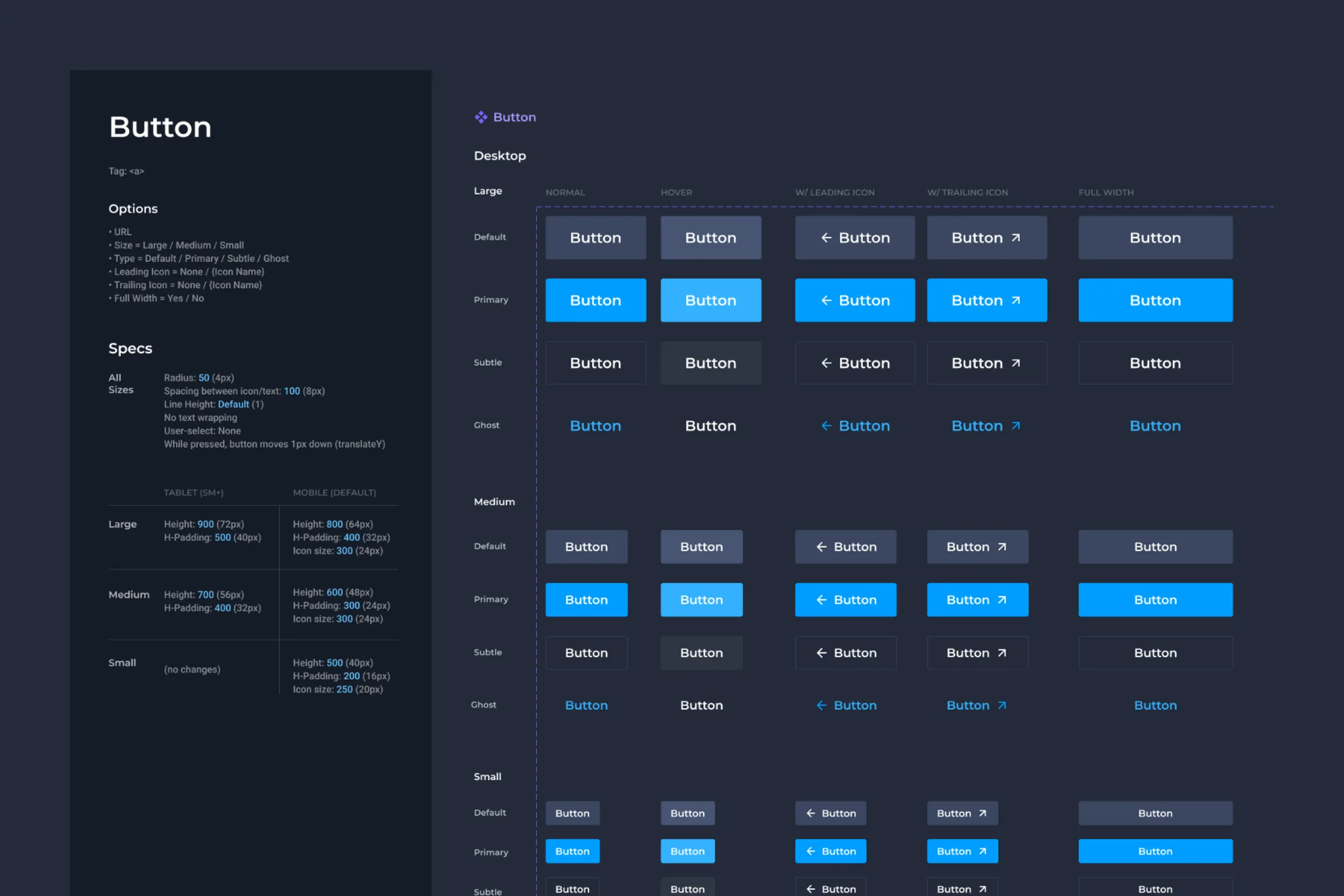
Then components specced down to the pixel, with every size, state, and responsive breakpoint documented so engineering could implement it without guessing at intent.
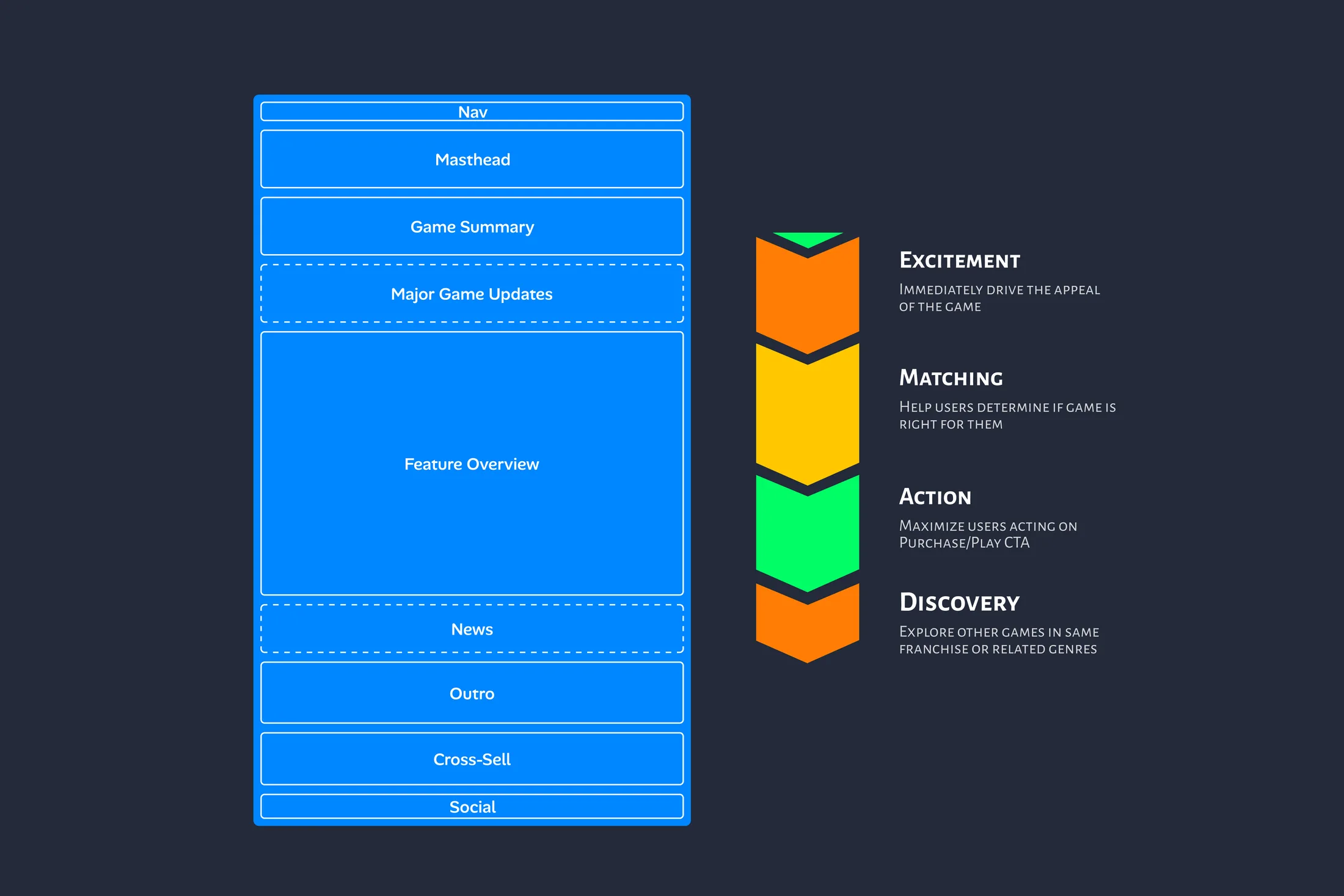
One page structure, tuned for a single job. Every franchise page assembles from the same section library, mapped to a funnel that excites, helps visitors match themselves to the game, then drives them to act.
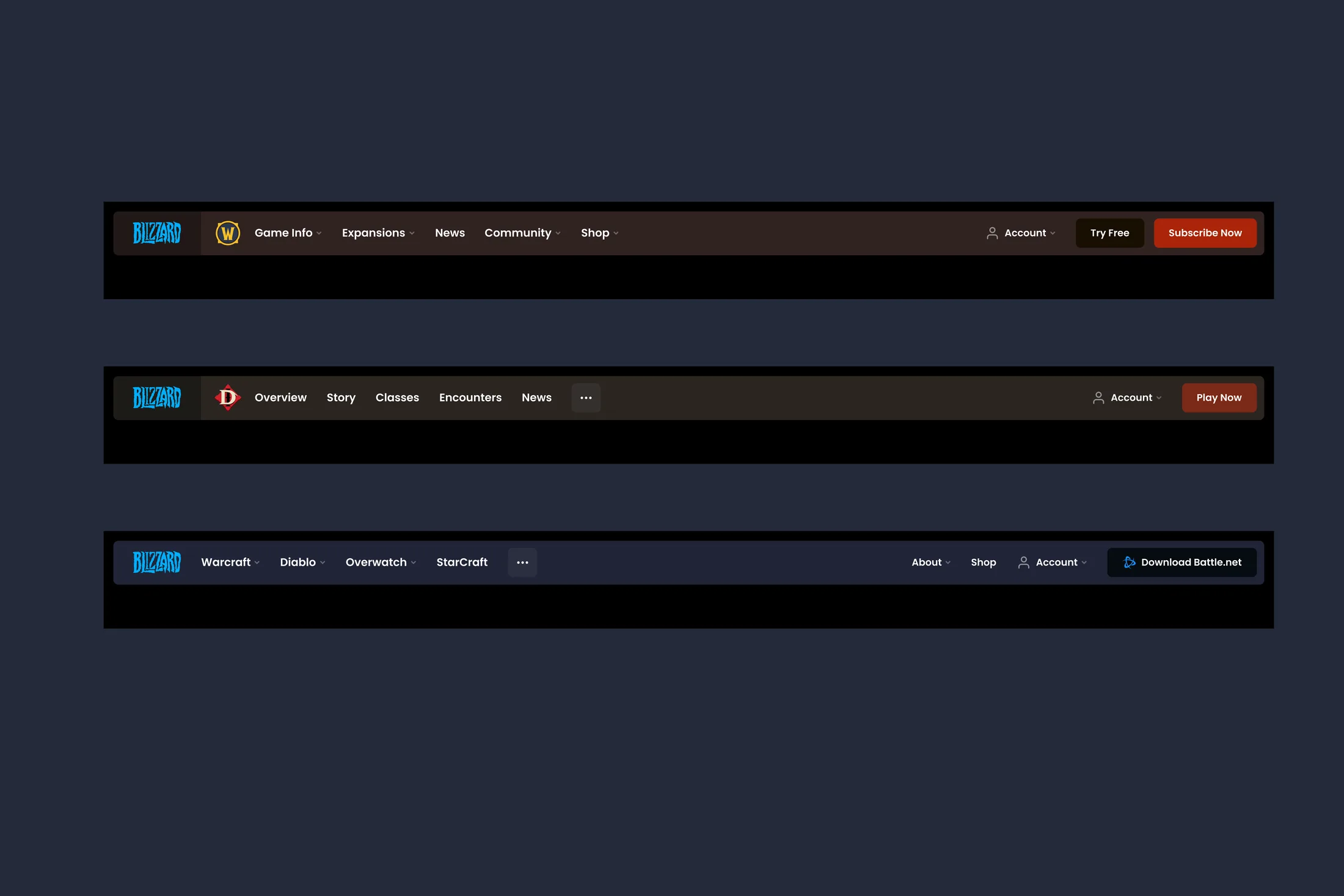
Same components, different skin per franchise. Swapping a franchise’s token set re-themes every shared component automatically, so World of Warcraft’s account menu feels native to Warcraft without a single custom-built dropdown.
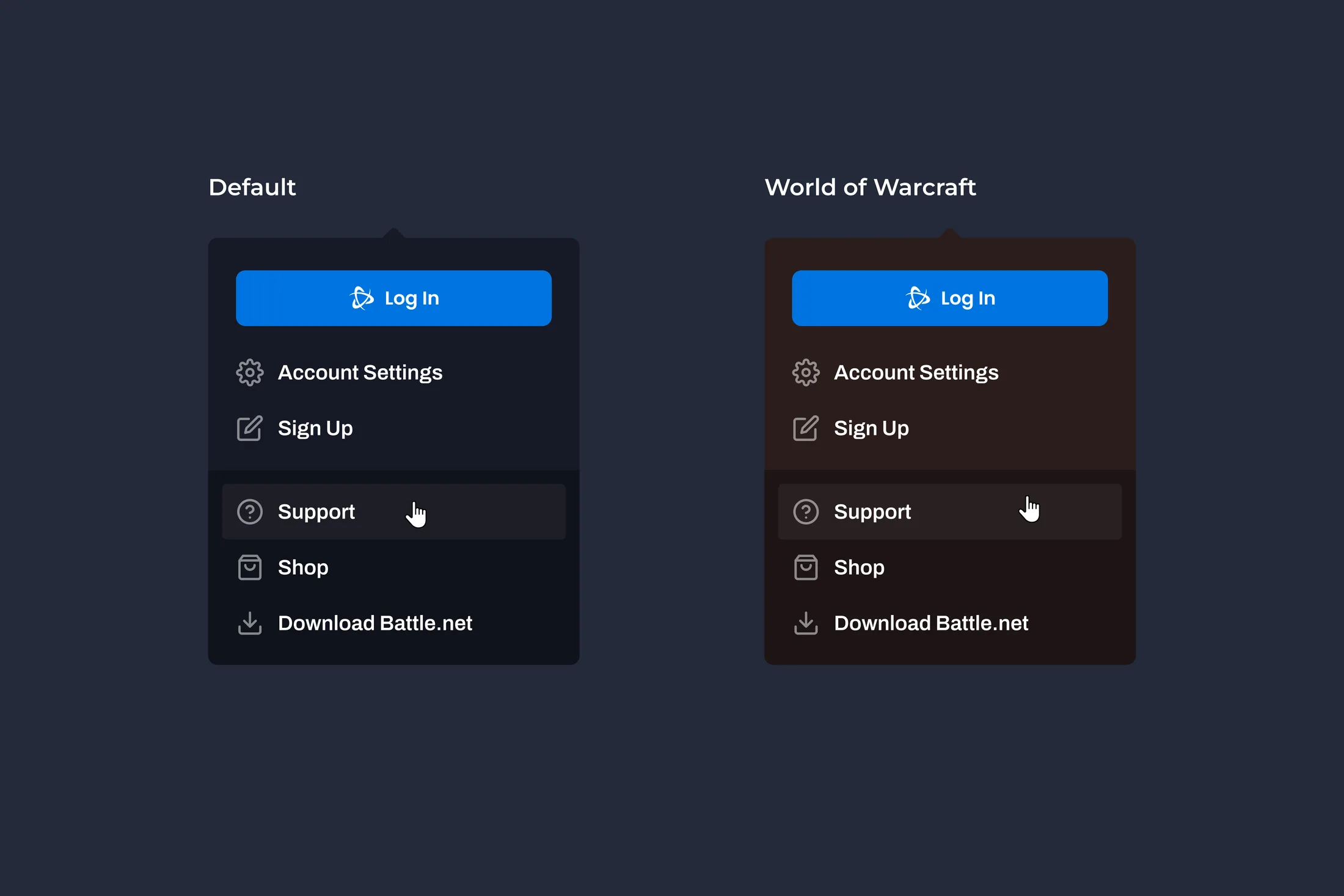
Warcraft, Diablo, Overwatch, or StarCraft, All new games now run the same nav component, just re themed per franchise, instead of four separate implementations. Getting teams to adopt a shared system meant proving it could still feel bespoke to their players, not just consistent for engineering.